
Lupus
Lupus erythematosus is an autoimmune disease in which the immune system attacks the body’s own tissues. The cutaneous forms — chronic discoid lupus and subacute cutaneous lupus — mainly involve the skin, with lesions on sun-exposed areas, and follow a relapsing course.
Normally the immune system recognises and destroys foreign agents. In lupus this ability to discriminate is lost: the body produces autoantibodies directed against its own components, particularly against material from the cell nucleus. The resulting immune complexes are deposited in tissues and trigger inflammation. In the skin, the inflammation concentrates at the junction between epidermis and dermis and around the hair follicles, which explains the appearance of the lesions and, in chronic forms, the permanent loss of hair in the affected areas.
Who is affected. Lupus occurs more often in women than in men, usually beginning between the ages of 20 and 50. It is more frequent and often more severe in people with darker skin. Genetic predisposition plays a part, but the disease is not passed directly from parent to child; environmental triggers are also required.
The cutaneous forms.
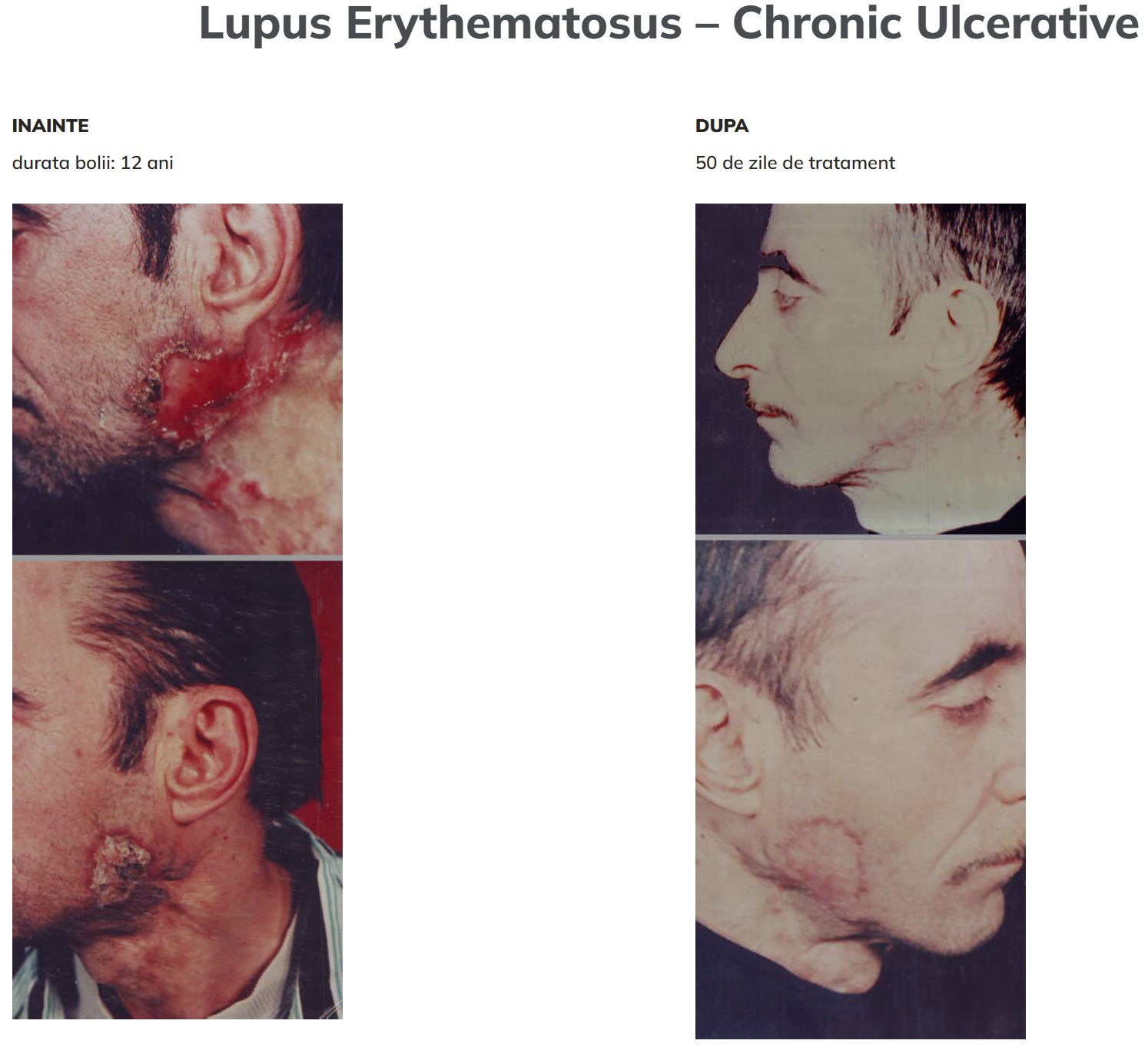
- Chronic discoid lupus erythematosus. This is the most common cutaneous form. It shows as round, well-defined, red to violaceous plaques covered by adherent scales that extend into the follicular openings. They appear mainly on the face — cheeks, nose, ears, scalp — and on the neck. In the centre the lesions gradually become atrophic, the skin turning thin and whitish, while a darker rim remains at the edge. On the scalp the lesions lead to scarring alopecia, that is, permanent hair loss in the affected area. The lesions may be slightly tender or itchy, but they are often symptom-free, and the main consequence is cosmetic.
- Subacute cutaneous lupus. This typically appears on sun-exposed areas — the upper chest, shoulders, outer surface of the arms and upper back — and often spares the centre of the face. The lesions may be ring-shaped, with a red border and a paler centre, or they may resemble psoriasis plaques. They are strongly photosensitive and, unlike the discoid form, usually heal without scarring, although they can leave lighter or darker marks for several months. This form is sometimes triggered by certain medicines.
The link with systemic lupus. Systemic lupus erythematosus is the form that involves, besides the skin, the joints, kidneys, lungs, heart or nervous system, with fatigue, fever, joint pain and the “butterfly” rash across the cheeks and nose. Most patients with discoid lupus confined to the skin do not develop systemic disease, but some may have or later develop general manifestations; for that reason a general medical assessment with blood tests is advised at diagnosis, together with periodic follow-up.
Triggering and aggravating factors:
- Exposure to sunlight and ultraviolet rays, including strong fluorescent lighting and tanning devices — the single most important factor.
- Smoking, which is associated with more extensive lesions that respond less well to treatment.
- Certain medicines, in predisposed individuals.
- Infections and periods of major stress.
- Hormonal changes, including those of pregnancy.
- Local injury to the skin, which can cause new lesions to appear at the injured site.
What the patient sees over time. The disease runs in flares, with quiet periods of variable length. Older lesions often leave pigment changes — lighter or darker areas — and, in the discoid form, permanent atrophic scars. Daily sun protection, including on cloudy days and in winter, is the constant recommendation in all forms of cutaneous lupus, alongside giving up smoking.
In our practice, cutaneous lupus is addressed through the Kozak Method — internal and external treatment, individually tailored, following a consultation. Results differ from patient to patient.
Documented cases (from the archive)
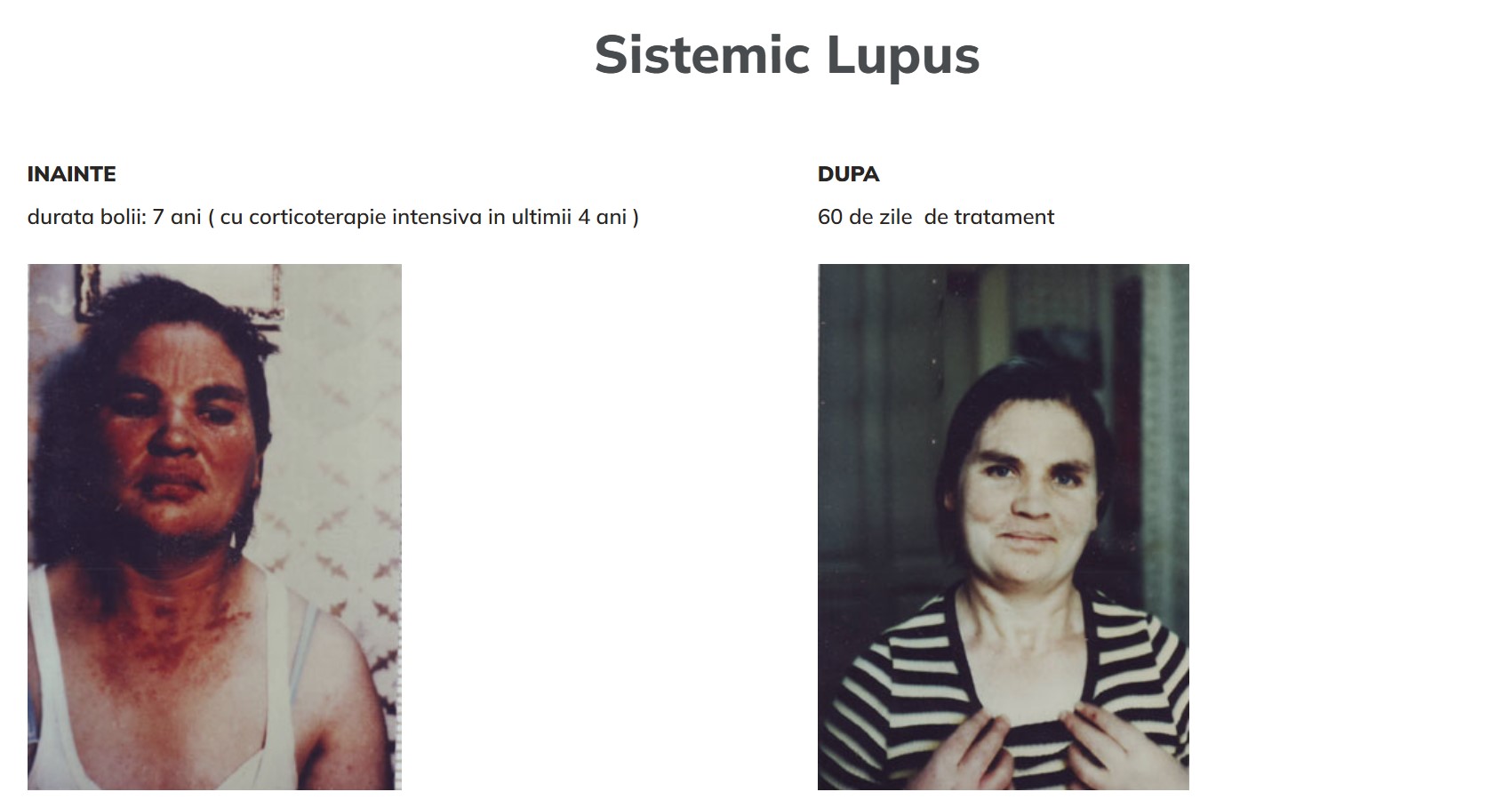
Systemic Lupus

Chronic Cutaneous Lupus
The results shown are individual cases; the course of treatment differs from patient to patient.