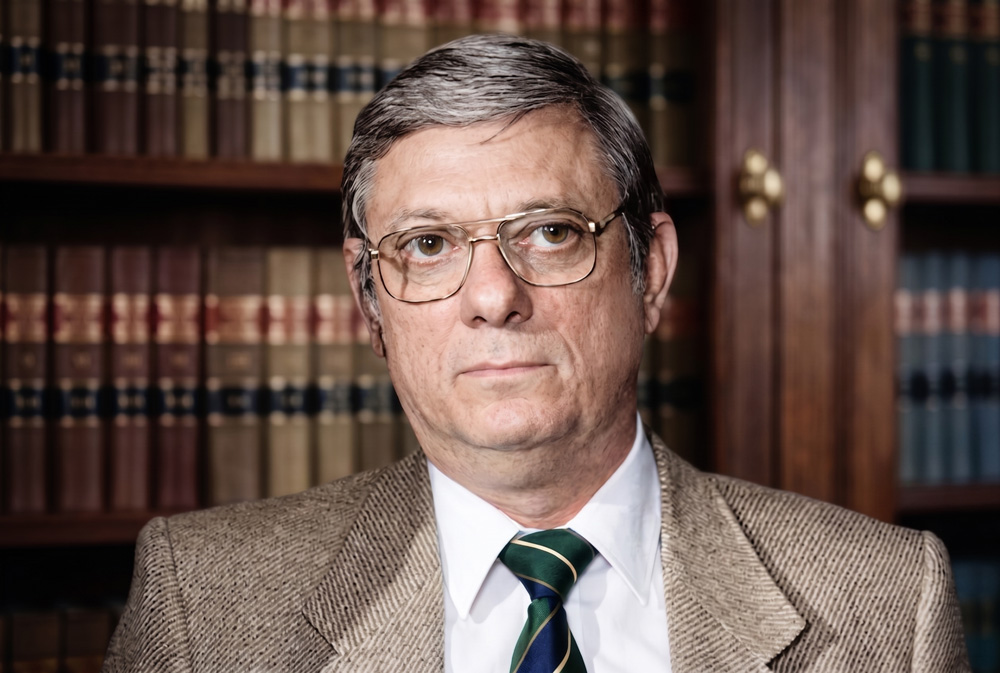
Prof. Pavel Kozak, a remarkable figure of Romanian ingenuity, discovered and developed the dermatological method that bears his name. The story of a self-taught researcher who first cured himself and then patients from all over the world.
Prof. Pavel Kozak
Pavel Kozak, a remarkable figure of Romanian genius with a deep love for his people and his country, suffered in his youth from a chronic skin disease that could not be cured for many years by the level of development of dermatological medicine at the time, even though he underwent – both literally and figuratively – an entire series of treatments that produced no result whatsoever.
He began his healing work – unrecognized by the medical establishment in Romania at the time – by first curing himself, and then his former companions in suffering – patients afflicted with various terminal forms of serious skin conditions – with whom he had spent many years together in the hospital bed at Floreasca.
The extraordinary results thus obtained made him understand that his method had concrete practical value, and he set out to offer it to other skin-disease sufferers as well, in order to give them too a real chance of returning to a normal life, fully cured.
The first reports about this new treatment possibility appeared in 1967 in several press articles in Romania, for example in the then very well-known magazine Flacăra. The results obtained, the large number of patients treated and cured, and the explicit requests for access to this method from many other patients of all social categories, including prominent medical figures, compelled the Romanian authorities of the time to consider the possibility of a scientific basis for the Kozak method; consequently, they agreed to carry out an organized scientific study at the Fundeni hospital in Bucharest between 1977 and 1979, where an entire series of tests of the Kozak method were conducted, supervised by authorized medical commissions.
As the results were indisputable, Pavel Kozak received the title of first-class scientific researcher of Romania, even though he had no formal academic medical training – something unacceptable at the time. He also received an invitation to take part in the Atlantic Congress of Dermatology in Montreal, Canada, in 1979, a first-ever participation for Romanian dermatology.
The results presented at the congress received unanimous confirmation of the method's validity. Following the information received from home and exasperated by the obstacles placed in his way by the authorities, he was compelled to remain abroad with the same goal: „the healing of dermatological patients”.
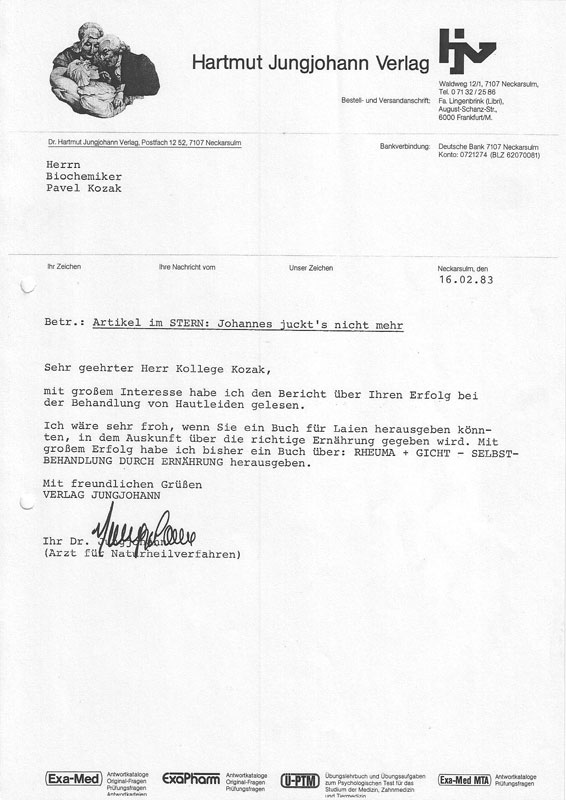
Initially in Germany, where he worked in various clinics achieving the same spectacular results recognized by the international and local press, in highly prestigious magazines such as „Stern”, which reported in great detail, over several pages, the remarkable successes achieved by Pavel Kozak in these clinics – something rarely seen in Stern magazine when it comes to medical matters, as the magazine is not specialized in this field.
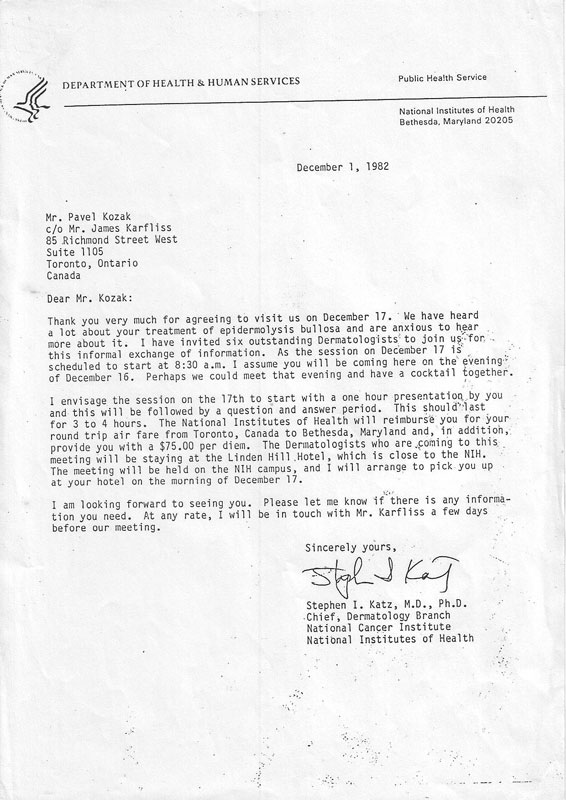
His reach extended to patients from European countries such as England, the Netherlands, the Scandinavian countries, France and Italy, as well as from Australia, Japan, South America and, not least, Canada and the USA. In 1982 the Ontario Ministry of Health awarded the University of Toronto a grant for a research programme on chronic skin diseases, and the first clinical study within that programme was to use the Kozak method; in the 1982–1983 fiscal year the protocol was applied to nine children with epidermolysis bullosa at the Hospital for Sick Children in Toronto. In December 1982 Pavel Kozak was invited to present the method at the National Institutes of Health in Bethesda, United States, before a group of dermatologists, at the invitation of Dr Stephen I. Katz, head of the dermatology branch.
His treatments were used by actors, athletes, musicians and other public figures from various fields of activity of international renown. For health reasons he moved to Spain, to the institute opened in Cabanelles, where he carried out the same prestigious work, achieving exceptional results in diseases considered incurable, such as epidermolysis bullosa simplex, scleroderma, atopic dermatitis, etc.
The revolutionary year of 1989, the opening of the borders and the change of regime allowed him to return to the country, while he still carried out his medical work in Spain until 1998, when he opened the „Dermatonou Pavel Kozak” clinic in Bucharest, on Plantelor Street, a clinic that to this day strictly upholds the Pavel Kozak Method.
„Sala de așteptare” — a dedication by Adrian Păunescu
In 1981 the poet Adrian Păunescu dedicated to Pavel Kozak the poem „Sala de așteptare” (The Waiting Room), published in the volume Rezervația de zimbri. The poem is reproduced below in the original Romanian.
Pavel Kozak, marele descoperitor român autodidact, suferă în străinătate de dorul țării lui.
L-am văzut, am vorbit. E mai alb cu o sută de ani, e mai trist cu distanța, cu o boală într-adevăr incurabilă.
Deschide, Mamă, ușile și iartă pe toți copiii tăi ce nu te-au pângărit, și o să fii mai puternică decât toate.
Mult creier românesc plânge în sala de așteptare a Planetei Pământ.
Încotro s-o ia? Ce tren să apuce?
Pe unii, rușinea, pe alții, ambiția, pe ceilalți umilința îi țin departe și-i înrăiesc.
Și trenurile trec prin gară și viața-i scumpă. Încotro — fiecare?
Mamă, mamă, trimite un tren după ei să se-ntoarcă, într-o duminică dimineața a-ntregului neam românesc, să stea la prânz la masă și luni să se-apuce de treabă.
Years later, Pavel Kozak spoke about that period on Romanian Television, in the programme hosted by Mihai Tatulici on 17 July 1992: In my personal opinion, the magazine «Flacăra» did not take the question of medical priority lightly — these were serious matters. Adrian Păunescu did everything he could for me, and I thank him. He was also a guest on Adrian Păunescu’s programme „Schimbul de noapte”.
Documents
Documents kept by the family. Click any of them to view it full size.
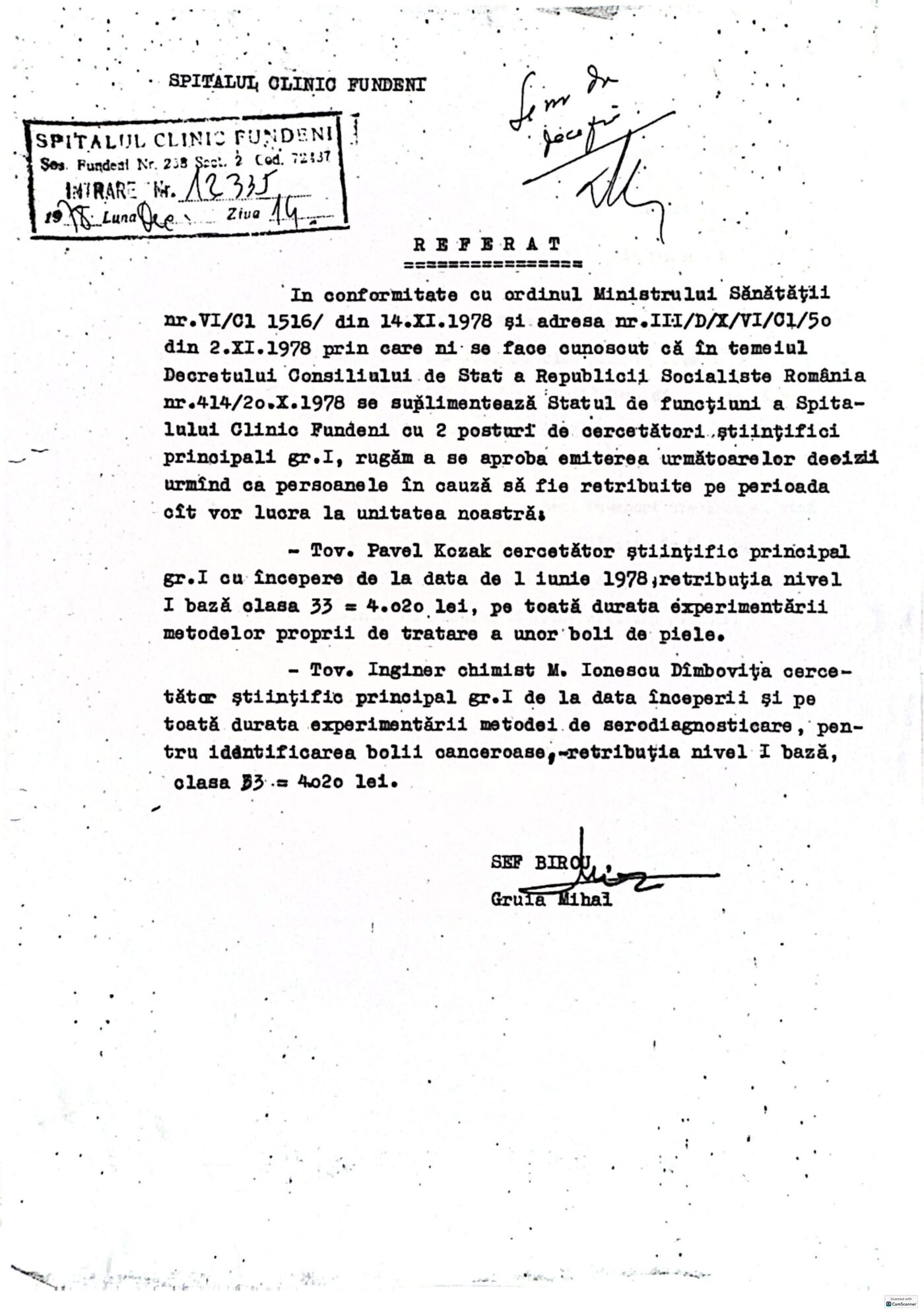
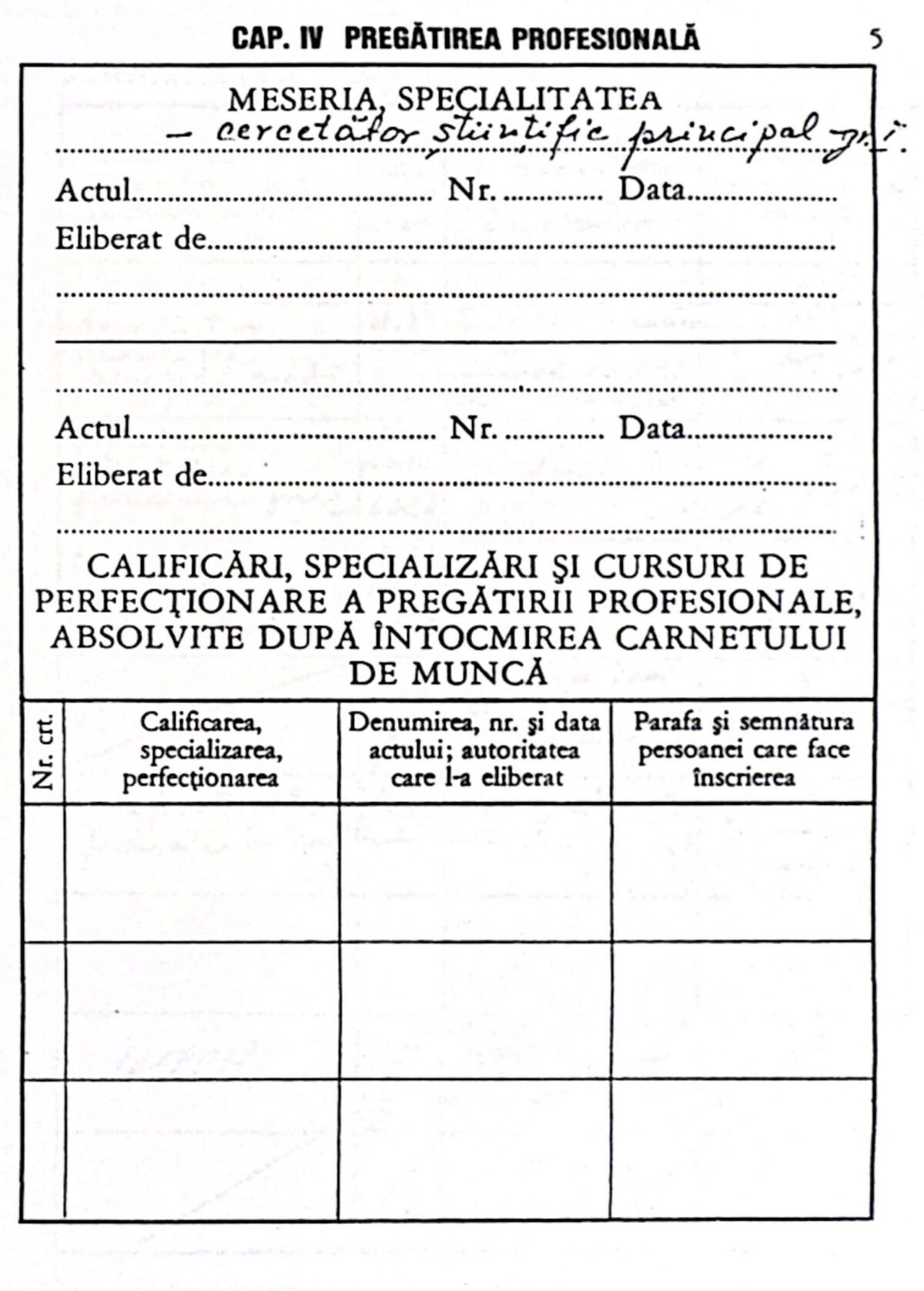
Memorandum, Fundeni Clinical Hospital — entry no. 12335 of 14 December 1978. It records the appointment of Pavel Kozak as senior research scientist, grade I, effective 1 June 1978, „for the whole duration of the trials of his own methods for treating certain skin diseases”.Inventor Certificate no. 61941 — State Office for Inventions and Trademarks. It recognises authorship of the invention; patent no. 61941 of 3 June 1976, with priority from 17 May 1976, file no. 86125.Employment record book, ch. IV — Professional qualification. Under „Occupation, speciality” the handwritten entry reads: cercetător științific principal gr. I (senior research scientist, grade I).Employment record book, ch. VI — Work activity. Appointment at the Fundeni Clinical Hospital from 1 June 1978 as senior research scientist, grade I (contract no. 249 of 20 December 1978), the interruption and resumption of activity during 1978, the end of the contract in May 1979, and at entry 5 — his work at S.C. Dermatonou Pavel Kozak, from 1999.
The correspondence and appraisals file
The correspondence received between 1979 and 1989, and the file of appraisals of the method. Patient names are covered.
Appraisals written by physicians after examining their own patient
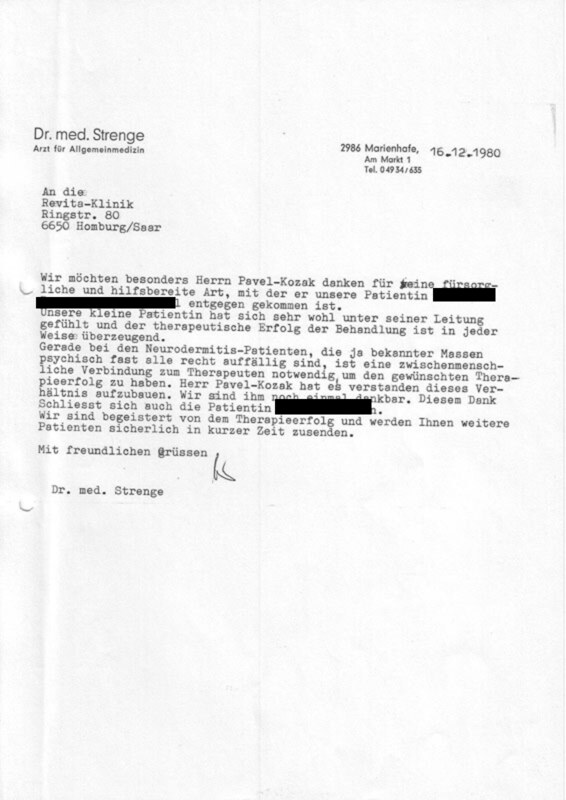
Dr. med. Strenge, general practitioner, Marienhafe — 16 December 1980, in German. He confirms the therapeutic success in a patient with neurodermatitis whom he was following himself, and announces that he will send further patients.Dr. Lionel Boxall, Chief of Dermatology, Hospital for Sick Children, Toronto — 20 October 1981. He re-examined the patient himself after the treatment at the clinic: „His improvement has been truly remarkable".Dr. Esther Libman, Markham Place Medical Centre, Thornhill (Ontario) — 4 April 1986. A patient with scleroderma diagnosed in August 1982, under treatment „with much success"; she recommends that it continue.Dr. Marc Bourcier, dermatologist, Hôpital Dr-Georges-L.-Dumont, Moncton — 1 September 1988. A re-examination 16 months after the patient returned from Spain: „she is certainly objectively better… She still has opened sores but her overall condition is significantly better".Dr. A. Taïeb, Service de Dermatologie, Hôpital des Enfants, Bordeaux University Hospital — 10 February 1989, in French. His own follow-up, over nearly a year, of a child with recessive dystrophic epidermolysis bullosa: satisfactory growth, few superinfections, but the involvement of the hands is becoming worrying.
The correspondence, 1979–1989
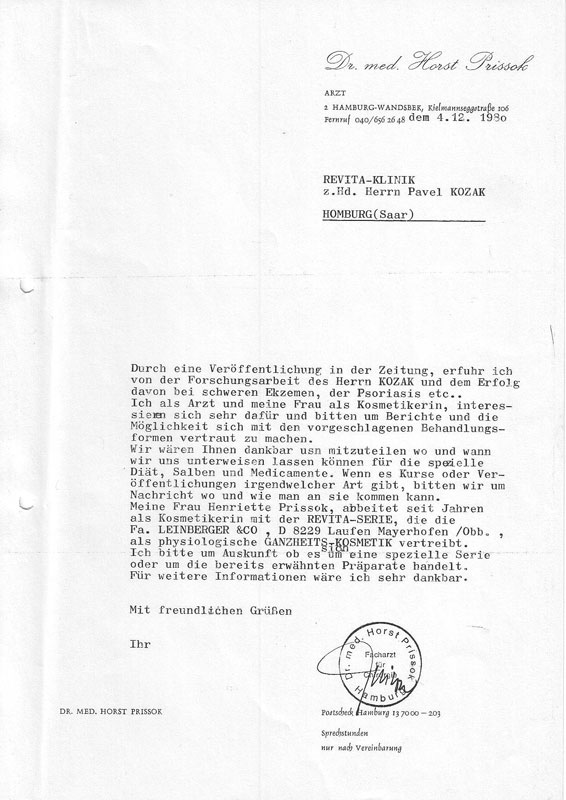
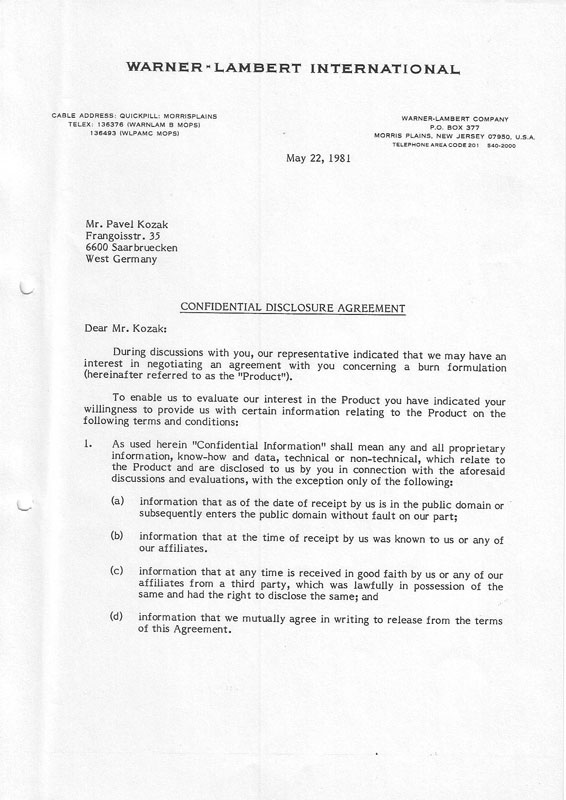
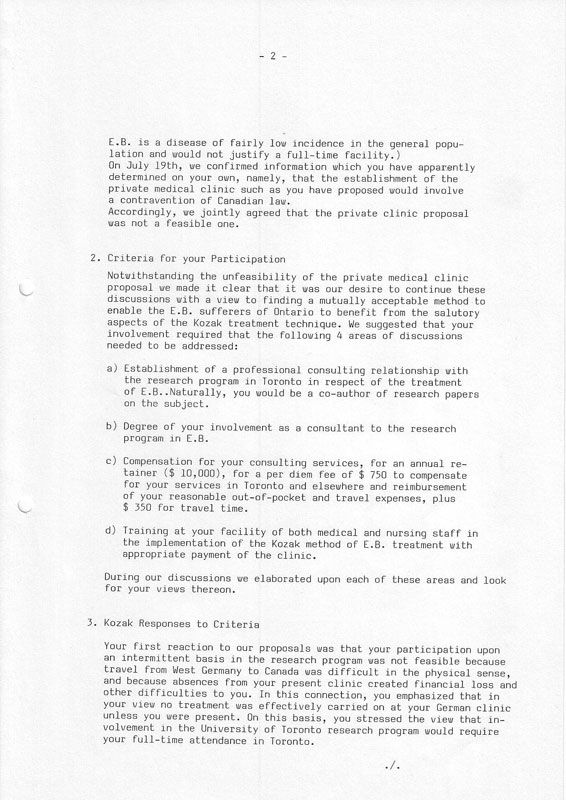
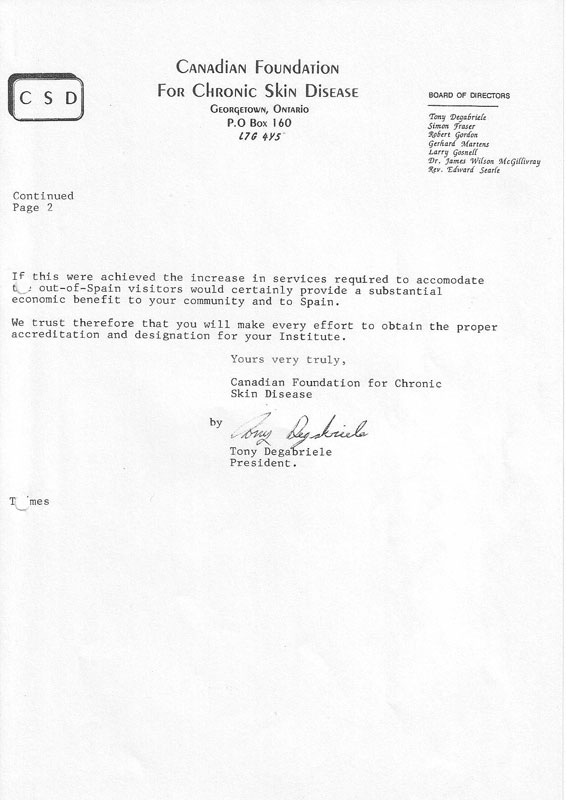
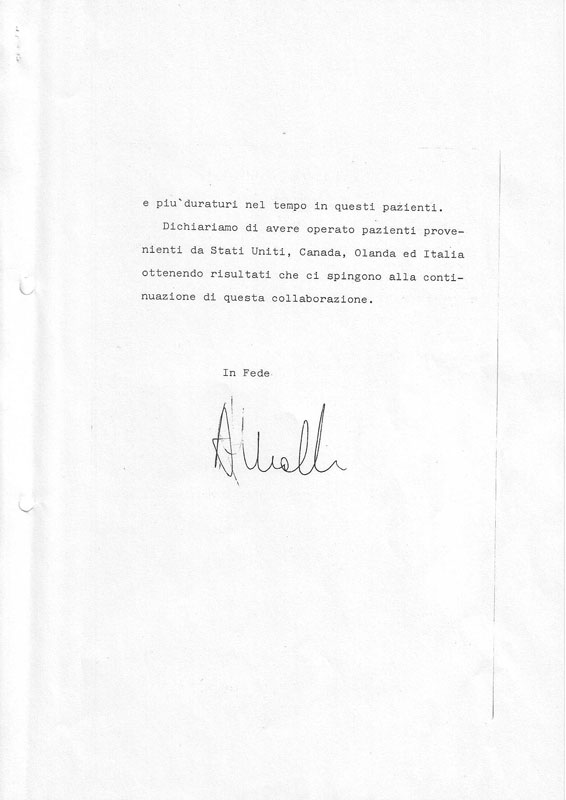
The table of contents — the list of letters, with sender and date, drawn up by the family.Neville Kirsch, M.D., Yale School of Medicine — 14 June 1979. He saw the results presented in Montreal and asks to be told the method; he is annoyed that it was not disclosed.Dr. med. Horst Prissok, Hamburg — 4 December 1980. He asks for information material after reading about the method in the press.Dr. med. J. H. Köchling, Rheda-Wiedenbrück — 21 May 1981. He asks for the treatment principles for a six-year-old child with eczema.Warner-Lambert International, Morris Plains, New Jersey — 22 May 1981. A confidentiality agreement for a possible burn formula. Page 1 of 2.Page 2 — the document was left unsigned.Monique Bégin, federal Minister of Health, Canada — 27 October 1981. An official invitation to Canada.Otto Jelinek, Member of Parliament for Halton, House of Commons — 28 October 1981. He announces that he has obtained the minister’s invitation.Prof. Dr. C. E. Orfanos, Freie Universität Berlin — 30 October 1981. He asks for information about the method, on the basis of what he has been told.Theodore Bosworth, Dermatology News, New York — 2 November 1981. A press enquiry, asking for clinical data.Dr. med. H. Retzlaff, Detmold — 20 November 1981. He forwards the critical article by Prof. Zaun published in the German trade journal. Page 1 of 2.Page 2 — he asks to see the clinic and the cases under treatment.Dr. med. Gisela Boateng, Remscheid — 15 December 1981. She asks for information material for her own patients.A. Eugene LeBlanc, Director in the Ontario Ministry of Health — 18 March 1982, in Romanian. He announces the grant awarded to the University of Toronto.Prof. C. A. Ramsay, University of Toronto — 19 March 1982. He announces the grant and asks for direct involvement.Prof. C. A. Ramsay — 13 April 1982, in Romanian. An invitation to work as a consultant to the programme.Dr. H. J. Albers, dermatologist, London (Ontario) — 22 April 1982. He asks to visit the clinic.Prof. C. A. Ramsay — 16 June 1982. The grant of 900,000 Canadian dollars awarded to the University of Toronto by the Ontario Ministry of Health for research into chronic skin diseases; the first clinical trial was to use the Kozak method. Page 1 of 2.Page 2 — the terms of the consultancy contract: 10,000 dollars a year, 750 per working day and 350 per travel day.Prof. C. A. Ramsay — 17 June 1982, the Romanian version of the letter above. Page 1 of 2.Page 2 — the translation of the Ministry of Health letter about the grant is attached.Igor Ellyn, legal counsel of the University of Toronto — 21 July 1982. A record of the negotiations held in Frankfurt. Page 1 of 4.Page 2 — a private clinic was not possible under Canadian law.Page 3 — Ontario law did not allow medical fees to be shared with someone who is not a physician.Page 4 — the signature.Stephen I. Katz, M.D., Ph.D., Chief of the Dermatology Branch, National Cancer Institute, NIH Bethesda — 1 December 1982. An invitation to present the method on 17 December 1982 before six dermatologists, with travel and per diem covered.A second copy of the same letter, kept in the file.Hartmut Jungjohann publishing house, Neckarsulm — 16 February 1983. It proposes a book for the general public, following the article in Stern.Prof. C. A. Ramsay — 25 April 1983. He renews the June 1982 offer; the request for a private hospital could not be considered.Gary R. Gehlbach, attorney, Dixon (Illinois) — 28 June 1984. The conditions for treating in the United States: a research protocol approved by the National Institute of Health and supervision by a licensed physician, „since you are not licensed as a physician in the United States". Page 1 of 2.Page 2 — the Katherine Shaw Bethea Hospital and the NIH were willing to collaborate; an answer is requested about working under a scientific protocol.Department of Health, Nova Scotia, office of the minister — 30 August 1984. It approves funding for a treatment, subject to four conditions, among them a „before" and „after" report from the attending dermatologist.Prof. C. A. Ramsay — 30 September 1986. The Toronto study has been completed and has led to publications: „such carefully controlled studies are essential in order to put your treatment in its correct perspective".Ronald S. Russell, Minister of Health, Nova Scotia — 14 October 1986. He approves the reimbursement of expenses for a patient treated at Cabanellas.Ronald S. Russell — 19 December 1986. He approves the revised claim.Murray J. Elston, Minister of Health, Ontario — 5 February 1987. He confirms in writing that the University of Toronto programme „included research into the use of Mr. Kozak’s methods of treatment for Epidermolysis Bullosa".Lorraine Hartley, R.N., Department of Health, Nova Scotia — 10 February 1987. The minister has approved the entire cost of the treatment at the clinic.Lorraine Hartley, R.N. — 28 August 1987. „extremely pleased with the progress of Epidermolysis Bullosa patients being treated by Dr. Pavel Kozak’s methods".Canadian Foundation for Chronic Skin Disease — 22 September 1987. An invitation to attend as observer and consultant at a clinic in Collingwood (Ontario).Canadian Foundation for Chronic Skin Disease — 8 October 1988. It asks for the Cabanellas institute to be accredited as a hospital; the letter shows that at that date it was not. Page 1 of 2.Page 2 — the signatures.W. H. van Harten, medical adviser, Regionaal Ziekenfonds Twente (the Netherlands) — 4 July 1989. The sick fund notes that „opinions differ very much" among dermatologists and offers to pay for a Dutch dermatologist to visit the clinic for an objective assessment.Casa di Cura S. Maria, Castellanza — the plastic surgery team of Prof. E. Morelli — 27 October 1989. A statement to the health authority of Gerona after six years of collaboration: the post-operative condition of patients treated with the Kozak protocol is „certamente migliori del normale". Page 1 of 2.Page 2 — patients operated on from the United States, Canada, the Netherlands and Italy.
The file „Appraisals of the Pavel Kozak Method"
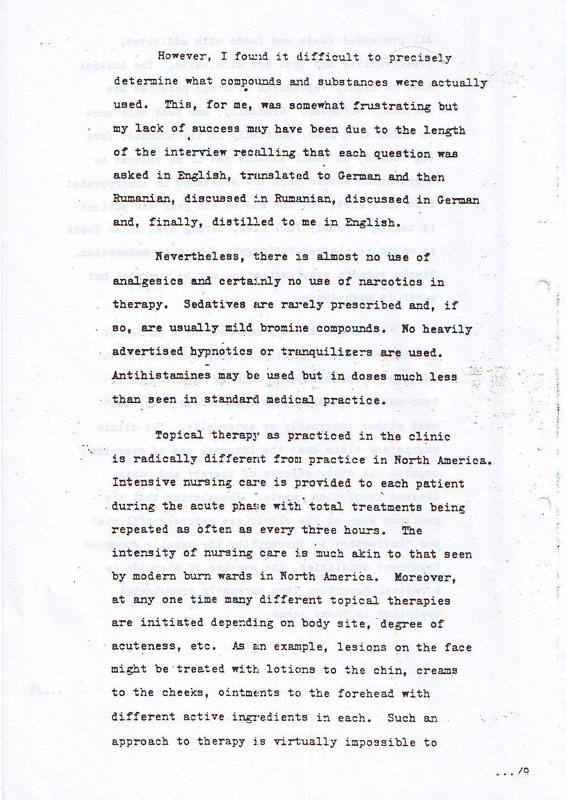
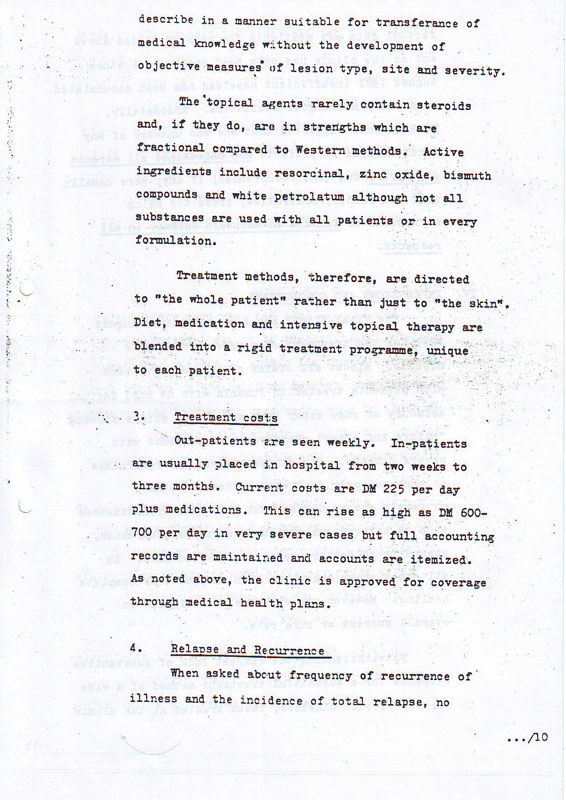
The cover of the file — „Appraisals of the Pavel Kozak Method".The table of contents — the seven documents in the file.Canadian Medical Association Journal, 1 July 1984, vol. 131 no. 1 — the cover of the issue.Page 10 — „Assessment of a treatment for epidermolysis bullosa". How the open study of the Kozak protocol came about: the November 1981 visit to Toronto, the accusations in the lay press that the medical profession refused to acknowledge a treatment developed by a non-physician, the decision to investigate it, and the programme funded by the Ontario Ministry of Health.Page 11 — the results. Nineteen patients treated, ten of them in hospital; in nine of those ten, a mean decrease of 76% in the number of blisters. In the long term, of 16 patients followed up, two showed objective and subjective improvement, eight subjective improvement only, and six no improvement. One severely ill child died of septicaemia. The authors note that blister healing accelerated in half of the patients, but they are not convinced that the recommended diet is essential and call for further studies.Page 14 — the conclusion and the signatures: Richard M. Haber, Colin A. Ramsay and Lionel B. Boxall, Division of Dermatology, University of Toronto.Report to the Minister of National Defence on the status of the Vital-Klinik — the cover.The title page — the report is signed by Lt.-Col. R. Alan Meakins, Chief of Medicine of the Canadian Forces Hospital Europe.Page 1 — the reason for the report and the visit to the clinic on 29 October 1981.Page 2 — the building and location of the clinic.Page 3 — the staff.Page 4 — Kozak’s account of the mechanism of the disease.Page 5 — the author’s critical observation: little scientific method behind the explanation.Page 6 — the treatment methods.Page 7 — the diet and the internal therapy, without cortisone.Page 8 — the intensive local treatment.Page 9 — the cost of the treatment and the question of relapses.Page 10 — impressions and conclusions.Page 11 — the author’s main reservation: the lack of objective assessment criteria.Page 12 — „Finally, and perhaps most importantly, one must take cognizance of the value of empirical treatment".The final recommendations of the report.„Anfragen aus dem Leserkreis" — the cover.The readers’ questions column of Der Deutsche Dermatologe, no. 10, October 1981. The editors’ answer to readers’ questions about the method: Kozak is not a physician and does not hold the status of Heilpraktiker under German law.The continuation of the column.The speech of Larry Grossman, Minister of Health of Ontario, at the Hospital for Sick Children — the cover.The title page — 19 March 1982.Page 1 — „I am certain you are familiar with the work of Pavel Kozak, the biologist who has become the focus of some public attention because of his pioneering work in the treatment of the chronic skin disease".Page 2 — the announcement of the research programme at the University of Toronto.Page 3 — the closing.The Romanian translation of the speech — the cover.The translation, page 1.The translation, page 2.The translation, page 3.The translation, page 4.The translation, page 5.
This website uses no analytics or advertising cookies. Details